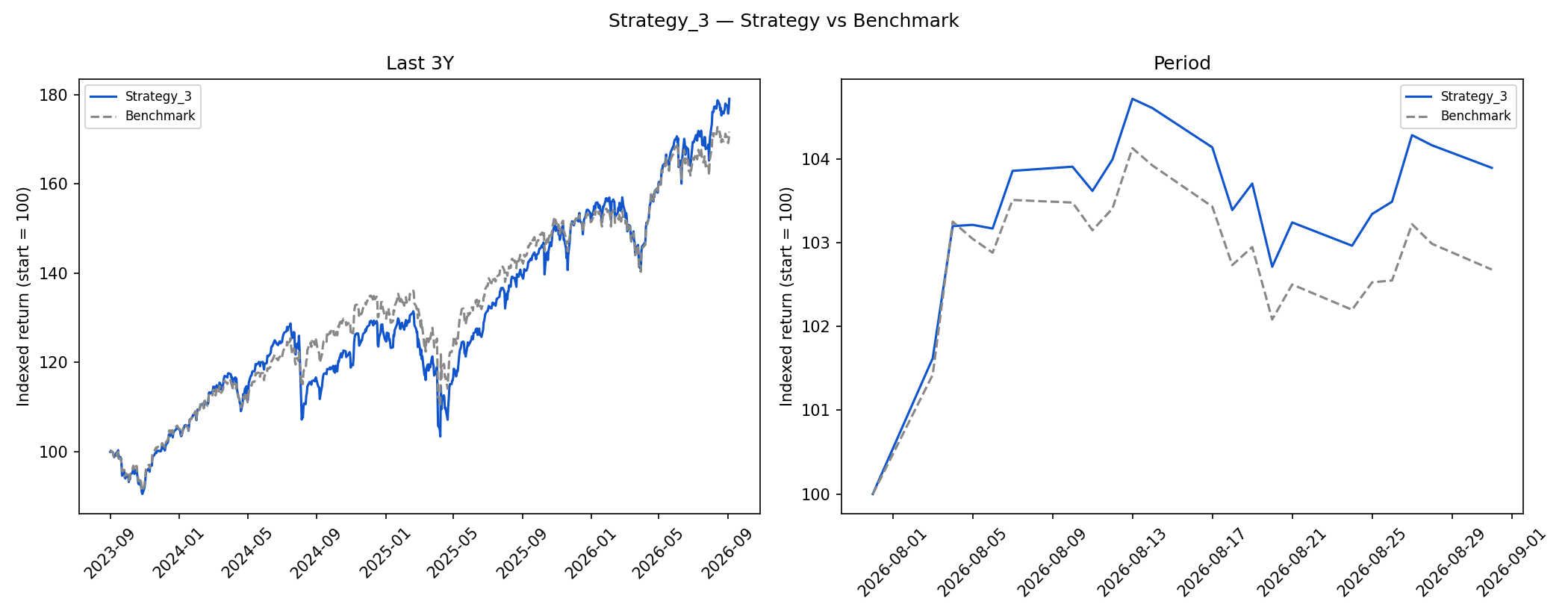
Systematic Surface Capture: August 2026
The Systematic Surface Capture strategy returned +3.39% in August, outperforming the S&P 500 by +0.71% as both axes of the volatility-surface approach — the short call strip capturing overpriced upside skew, and the put diagonal harvesting front-tenor decay — contributed positively in a steady, low-volatility rally. The result is a demonstration of the dual-axis design working as intended: two independent sources of structural premium, neither reliant on market direction, combining to deliver a better outcome than the index.
The Systematic Surface Capture strategy returned +3.39% in August, outperforming the S&P 500 by +0.71% as both axes of the strategy's volatility-surface approach contributed positively. The book harvests two independent inefficiencies: the structural overpricing of upside "crash-up" protection via short-dated out-of-the-money calls, and the accelerated front-tenor decay of the net-short put ratio leg. August's environment was well-suited to both.
The S&P 500's +2.7% advance was broad and steady rather than explosive, meaning the deep-OTM short calls were not threatened by the kind of sharp melt-up that generates assignment stress on the call strip. Simultaneously, the VIX near 14 kept implied volatility elevated enough on a relative basis for the front-month put premium to decay faster than the longer-dated back leg appreciated — the term-structure dynamic the put ratio is built to exploit.
The trend filter remained fully open throughout, as the index stayed well above its long-horizon trend, so no exposure was trimmed and both blocks ran at full VaR-budgeted size. The dual-axis construction, harvesting skew and term structure simultaneously, delivered a meaningfully better outcome than the index in a month that rewarded disciplined, non-directional premium collection.
Talking points
- The strategy outperformed the S&P 500 by +0.71% in August by extracting income from two separate structural features of the options market simultaneously — neither of which required a view on market direction. The short call strip collected premium on overpriced upside protection that expired worthless in a measured, non-explosive rally, while the put ratio harvested the faster decay of short-dated premium relative to longer-dated hedges. Both engines ran cleanly.
- August's steady equity advance was close to an ideal environment for this structure — strong enough for the trend filter to stay open, gradual enough not to threaten the short call positions. A sharp gap or melt-up in equities is the scenario that stresses the short call leg most acutely; August's rally was sustained but orderly, keeping both blocks within their risk budgets while continuing to earn carry.
- Clients should understand that the strategy carries real downside risk in two specific scenarios: a violent equity rally and a sharp volatility regime shift. The short upside calls lose money in a squeeze, and the net-short put ratio is not fully hedged against a severe drawdown. August avoided both conditions — which is a key reason the strategy outperformed — and clients should weigh that context alongside the strong monthly result.