Market update: July 2026
The single most significant driver of July 2026 was the renewed US-Iran military escalation, which sent oil surging roughly 24% to close near $92/bbl, its strongest monthly gain since March, and reignited an inflation narrative the Fed could no longer sidestep. The FOMC held at 3.50–3.75%, but three officials dissented in favour of an immediate hike, and the bond market delivered its own verdict: the 30-year Treasury yield surged to 5.21%, its highest since 2007, while the 10-year climbed to 4.67%.
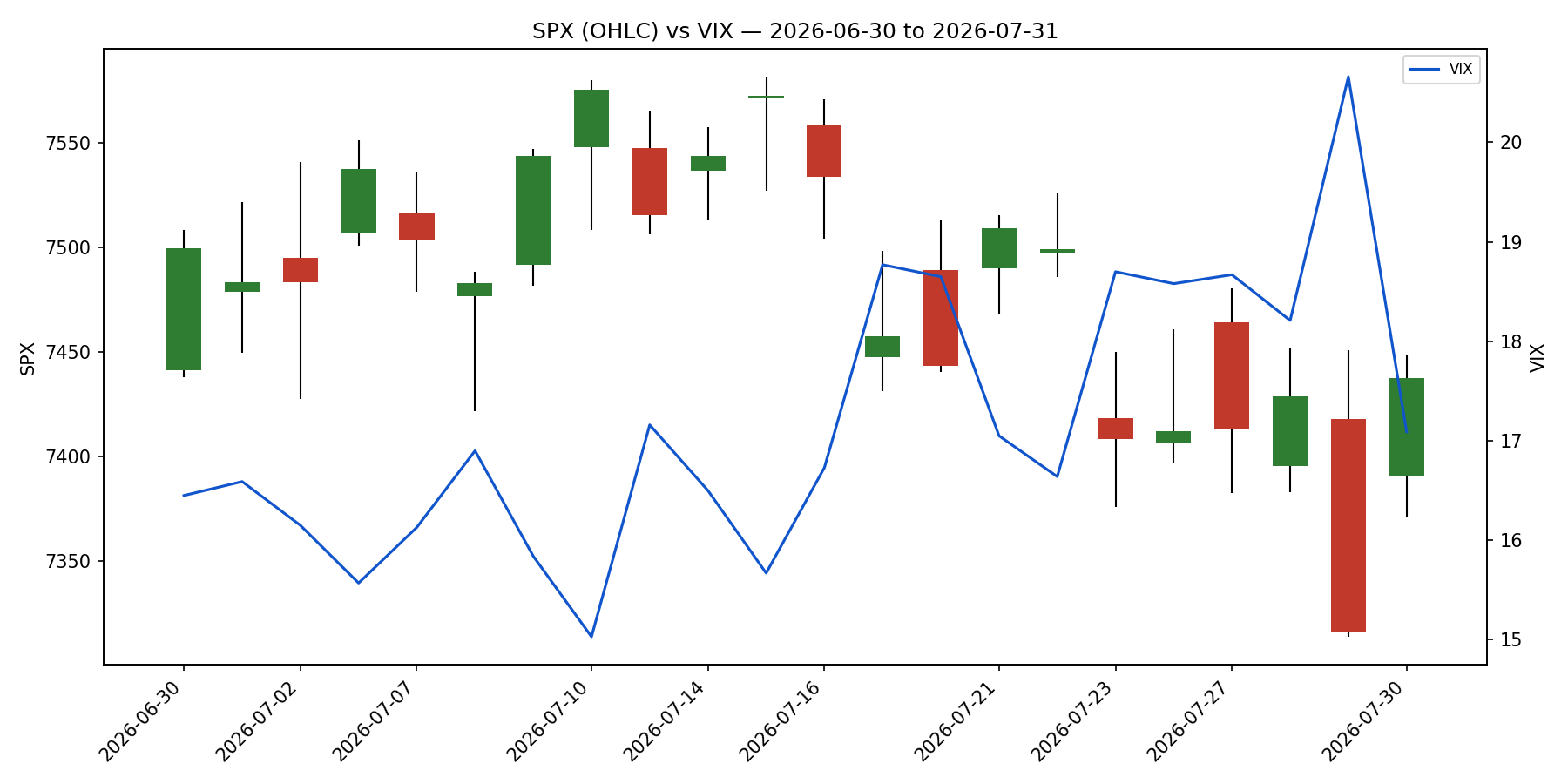
Against that backdrop, a second shock landed: Moonshot AI's capable open-source model reignited investor concerns about the justification for enormous US technology capex commitments, dragging the semiconductor ETF SOXX down 22.1% and leaving the S&P 500 off 0.13% at 7,489.72. Even as the equal-weight index gained roughly 1.1%, it exposed the index's dependence on a handful of mega-cap names. The Euro Stoxx 50, structurally tilted toward energy and financials with minimal semi weight, outperformed materially and held the upper half of its 6,200–6,430 July range.
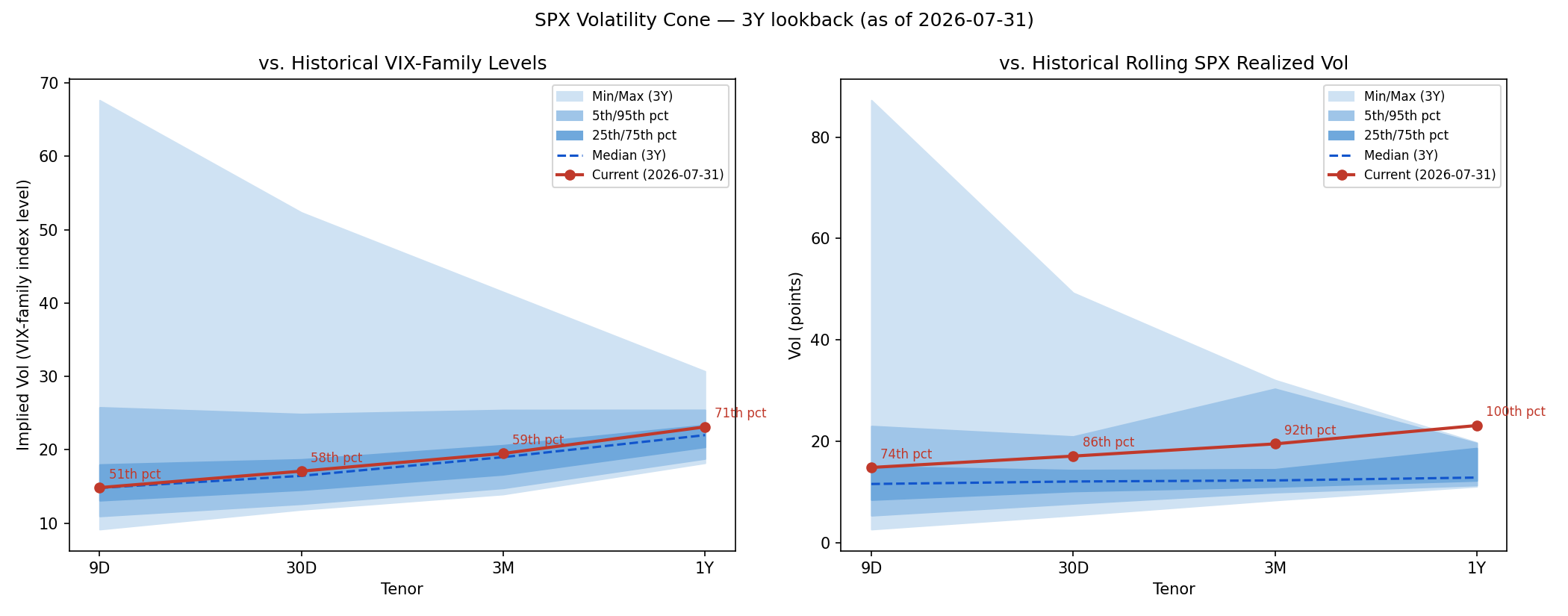
VIX settled at 17.09 against a 20-day realised volatility of just 11.9% — an historically wide VRP — as dispersion, rather than systemic stress, defined the regime. Gold closed up roughly 2% near $4,075, while EUR/USD rallied to 1.153 as Warsh's refusal to provide forward guidance was read as ambiguity rather than commitment, weakening the dollar even as long-end yields hit multi-year highs.